The Conversation
22 Sep 2025, 15:53 GMT+10

Share article
Print article
The UK, Canada and Australia are among a group of nations that are moving to formally recognise the state of Palestine like most other states have done over the years. This move is a major diplomatic shift and turning point in one of the world's most intractable conflicts. Here's what it means.
Recognising Palestine means acknowledging the existence of a state that represents the Palestinian people. Following from that, it also means that the recogniser can develop full diplomatic relations with representatives of this state - which would include exchanging embassies or negotiating government-level agreements.
Diplomatic recognition, when done in concert, carries more heft than isolated gestures - and governments know this. A year or so ago, Spain tried to get European Union members to recognise Palestine together and when this was not possible opted to coordinate its recognition with Norway and Ireland only. Further away, a cluster of Caribbean countries (Barbados, Jamaica, Trinidad and Tobago, the Bahamas) also recognised Palestine around the same time.
By acting together, countries amplify the message that Palestinian statehood is not a fringe idea, but a legitimate aspiration backed by a growing international consensus. This collective recognition also serves to shield individual governments from accusations of unilateralism or political opportunism.
This wave of recognition comes now because of concern that Palestinian statehood is under threat, perhaps more than ever before. In their recognition statements, the UK and Canada cited Israel's settlements in the West Bank in their reasoning.
The Israeli government has also revealed plans that amount to annexing Gaza, the other area that ought to belong to Palestinians. This is after months of assault on its people, which the UN commission of inquiry on the occupied Palestinian Territories and Israel found amounts to genocide. Public sentiment has also shifted dramatically in support of Palestine, adding to the pressure on governments.
Israel and some of its allies argue that the recognition is illegal because Palestine lacks the attributes of a functioning state, such as full control of its territory or a centralised government. Legal opinion on whether Palestine meets the criteria of statehood is divided. But, regardless, these criteria are not consistently used to recognise states.
In fact, many states have been recognised well before they had complete control over their borders or institutions. Ironically, the US recognised Israel in 1948, refuting critics that this was premature due to the lack of clear borders. Recognition has, therefore, always been political.
But even if we take a more legal perspective, the international community, through numerous UN and other texts has long recognised the right of Palestinians to have a state of their own.
Recognising a state does not mean you recognise those who govern it. At the moment, for example, many states do not recognise Taliban rule, but this doesn't mean they have stopped recognising the existence of Afghanistan as a state.
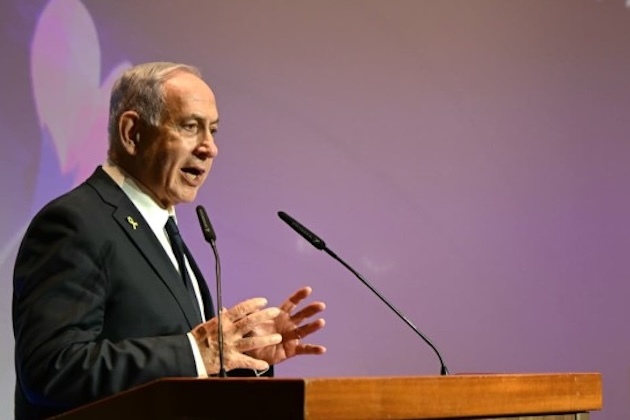
Similarly, the fact that Netanyahu is under arrest warrant of the International Criminal Court for war crimes and crimes against humanity has not resulted in states withdrawing their recognition of the state of Israel and its people. Recognising a state is not the same as endorsing a specific government.
Not only that but all of the states that recently recognised Palestine have explicitly said that Hamas must play no role in a future government. France said that although it recognises the state of Palestine it won't open an embassy until Hamas releases the hostages.
The past few years have laid bare the limits of diplomacy in stopping the horrific human catastrophe unfolding in Gaza. This doesn't leave much room for optimism. And, in a way, states taking brave diplomatic steps are, at the same time, exposing their reluctance to take more concrete action, such as sanctions, to press the government of Israel to end its war.
Still, the recognition brings the potential for snowball effects that would enhance the Palestinians' international standing. They will be able to work more substantively with those governments who now recognise their state. More states may now also recognise Palestine, motivated by the fact others did the same.
And more recognition means better access to international forums, aid and legal instruments. For example, the UN's recognition of Palestine as an observer state in 2011 allowed the International Court of Justice to hear South Africa's case accusing Israel of genocide and the International Criminal Court to issue an arrest warrant for Netanyahu.
The implications for the Israeli government and some of its allies could also be significant. The US will now be isolated as the only permanent member of the UN Security Council not recognising Palestine. States that do not recognise Palestine will be in a dissenting minority and more exposed to critiques in international forums and public opinion.
This growing isolation may not force immediate changes and may not bother the current US administration, which often does not follow the logic of traditional diplomacy. Still, over time, the pressure on Israel and its allies to engage with a peace process may grow.
In the end, recognition from some of the world's biggest players breaks their longstanding alignment with consecutive Israeli governments. It shows how strongly their public and governments feel about Israel's threat to Palestinian statehood through annexation and occupation. For Palestinians, recognition strengthens their political and moral standing. For the government of Israel, it does the opposite.
But recognition alone is not enough. It must be accompanied by sustained efforts to end the war in Gaza, hold perpetrators of violence accountable and revive peace efforts towards ending the occupation and allow Palestinians their rightful sovereignty alongside Israel.
Get a daily dose of Illinois Intelligencer news through our daily email, its complimentary and keeps you fully up to date with world and business news as well.
Publish news of your business, community or sports group, personnel appointments, major event and more by submitting a news release to Illinois Intelligencer.
More InformationThe deportees were flown in on a chartered plane that also reportedly carried citizens of Ghana, Zambia, and Mozambique A group of...
Russian President Vladimir Putin has offered to extend the New START treaty between Moscow and Washington -- the last remaining nuclear...
The current Israeli government is working methodically to prevent the prospect of a Palestinian state from ever being established,...
Helsinki [Finland], September 22 (ANI): Finland's President Alexander Stubb has urged that India should play a role in addressing the...
Share article Print article The UK, Canada and Australia are among a group of nations that are moving to formally recognise the...
New Delhi [India], September 22 (ANI): Real-time A2A payments are gaining critical mass, and their growth is likely to moderate at...
LONDON, U.K.: The United States is seeking to regain control of Bagram air base in Afghanistan, President Donald Trump said this week...
JERUSALEM - In a move that has sparked international debate, the Republic of Fiji has officially opened its embassy in Jerusalem, aligning...
LONDON, U.K.: Britain's foreign ministry said this week that the country's intelligence service will use a new dark web platform to...
LOS ANGELES, California: On September 18, U.S. President Donald Trump openly celebrated the suspension of late-night host Jimmy Kimmel,...
JERUSALEM - Israeli Prime Minister Benjamin Netanyahu says the idea that Israel was involved in the assassination of Charlie Kirk,...
Recent events in China have had an extraordinary and revealing effect on Australian domestic politics and invite comparisons with the...