ANI
25 Sep 2025, 19:41 GMT+10
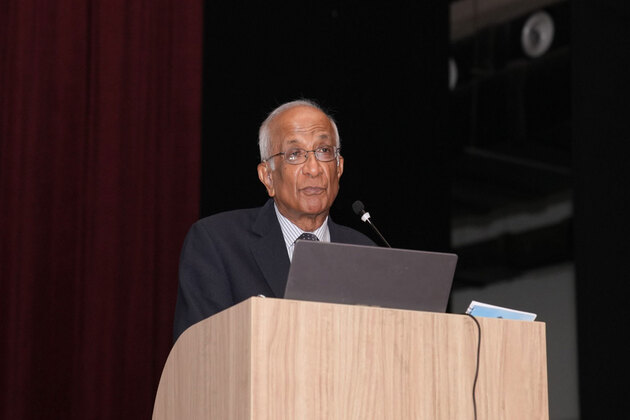
Goa [India], September 25 (ANI): Former Ambassador and international economic affairs expert V S Seshadri delivered a lecture on 'International Trade Law: Challenges and Outlook' at the India International University of Legal Education and Research (IIULER) in Goa. The event was organised as part of the Ministry of External Affairs' Distinguished Lecture Series, according to a release by IIULER.
In his lecture at the main auditorium of the Bar Council of India-run law school, Seshadri, a former IFS officer who served as India's Ambassador to Slovenia and Myanmar and held key diplomatic posts in the US, Iran, Thailand, and Belgium, examined the turbulence in the international trade landscape.
He discussed in detail the foundational principles of international trade under the WTO, the diverging trade strategies of the world's three major players - the United States, the European Union, and China - who together account for approximately 42 per cent of global merchandise trade, and the implications for India. He also addressed the challenges and potential responses, as well as the way forward.
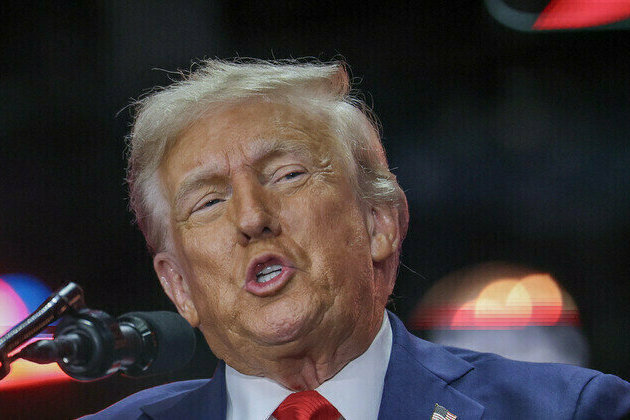
As per the release, Seshadri elaborated on the uncertainty and unpredictability caused by the unstable tariff policies introduced during the tenure of US President Donald Trump. He spoke of the growing geopolitical rift between the West and Russia, particularly over the Ukraine conflict, which has resulted in sanctions. He further examined the rising global economic profile of China, its non-market policies, extensive subsidies, and the weaponisation of its dominance in key sectors, all of which are contributing to fractures in the global trading system.
While discussing unilateralism by the United States, Seshadri noted that under Trump's first term, such measures were primarily targeted at China and focused on tariffs on imports of steel and aluminium. President Joe Biden, he said, retained many of these measures but worked more closely with allies and partners, including India.
In contrast, under Trump's second term, the US has significantly expanded its use of unilateral measures, using tariffs as a tool of leverage even against Free Trade Agreement partners. The concept of 'reciprocal tariffs' is being deployed not only to reduce trade deficits, rebalance trade, and boost domestic manufacturing but also to pursue broader goals such as economic security, curbing immigration, combatting drug trafficking, and penalising buyers of Russian oil. These actions are being undertaken under emergency powers provided by US laws such as the International Emergency Economic Powers Act or justified on 'national security' grounds under Section 232 of the US Trade Expansion Act, often in an arbitrary manner.
According to IIULER, Seshadri also highlighted certain patterns in bilateral deals imposed by the US on its trade partners. These include requirements for the partner country to reduce tariff and non-tariff barriers for US imports, commit to purchases of US energy, agricultural goods, and defence equipment, invest in US manufacturing, and provide US companies access to local resources. In return, the US merely agrees to roll back some of its previously elevated tariffs by a few percentage points.
'Despite that, the US under Trump-2 has imposed additional duties on national security grounds - including on autos and auto parts, and most recently on copper - with proposals to extend such tariffs to sectors like pharmaceuticals, semiconductors, and critical minerals. This undermines the predictability and stability that are essential for global trade, as well as the long-standing practice of 'less than full reciprocity' traditionally extended to developing country partners,' Seshadri said, as per the statement.
He cited comments by former US Trade Representative Robert Lighthizer and the current USTR Jamieson Greer, who advocate for a policy of 'trade rebalancing' and a 'two-tier' global trade system.
Seshadri also referred to the ongoing legal challenge in the United States questioning the president's authority to impose tariffs as part of emergency economic measures. He described it as 'the most consequential trade case,' noting that both the Court of International Trade and the US Court of Appeals for the Federal Circuit have ruled against these tariffs. The case is currently before the US Supreme Court, with a verdict expected by the end of the year.
Turning to China, he remarked that while the country presents itself as a proponent of inclusive globalisation, its actions tell a different story. He accused China of pursuing economic primacy and technological dominance through a model that includes creating excess production capacity, capturing overseas market share, fostering dependency, imposing debt traps, and weaponising these dependencies when needed.
Discussing the European Union's approach, Seshadri said the EU generally supports multilateralism and adherence to WTO rules but has also raised protectionist barriers through regulatory mechanisms - most notably the Carbon Border Adjustment Mechanism - whose WTO compatibility remains untested.
On India's approach, he stated that while India strongly supports multilateralism and largely complies with WTO rules, its global trade share remains a modest 2.3 per cent, limiting its leverage in shaping global trade norms. India's growing trade imbalance with China is a key concern, especially as China increasingly weaponises its dominance in critical sectors like rare earth minerals, magnets, and high-tech machinery.
He commended India's four-pronged strategy to reduce vulnerable dependencies: blocking risk-laden investments, technologies, and apps; strengthening indigenous manufacturing and competitiveness through Production-Linked Incentives; forging supply chain partnerships with trusted allies; and expanding India's FTA portfolio with select trade partners, including the EU.
Without naming Pakistan directly, Seshadri pointed out that a neighbouring country has chosen a self-destructive path by surrendering its natural and other resources to the US under the guise of a bilateral trade agreement, according to IIULER. (ANI)
Get a daily dose of Illinois Intelligencer news through our daily email, its complimentary and keeps you fully up to date with world and business news as well.
Publish news of your business, community or sports group, personnel appointments, major event and more by submitting a news release to Illinois Intelligencer.
More Information(Photo credit: Peter Casey-Imagn Images) FARMINGDALE, N.Y. -- Rory McIlroy has made his home in the United States for the better...
Goa [India], September 25 (ANI): Former Ambassador and international economic affairs expert V S Seshadri delivered a lecture on 'International...
Washington, DC [US] September 25 (ANI): United States President Donald Trump has once again taken a swipe at former President Joe Biden...
Tremors have been felt in the capital Caracas and across several states as far as neighboring Colombia At least ten powerful earthquakes...
Despite changing his rhetoric on Ukraine, the US president still wants a deal to make money with Russia, Kurt Volker has said US...
New Delhi [India] September 25 (ANI): Carl Pei, CEO and co-founder of the consumer technology brand Nothing, met with Union Minister...
HONG KONG: Hong Kong went into lockdown on September 23 as Super Typhoon Ragasa — the world's most powerful storm of 2025 — closed...
JALALABAD, Afghanistan: The Taliban government has firmly rejected U.S. President Donald Trump's renewed call to regain control of...
BRUSSELS, Belgium: A cyberattack that crippled check-in systems at several major European airports is still disrupting travel, forcing...
WASHINGTON, D.C.: President Donald Trump said media mogul Rupert Murdoch, his son Lachlan Murdoch, and Dell Technologies founder Michael...
SAO PAULO, Brazil: Brazil's health minister said this week he is not attending the United Nations General Assembly in New York after...
DUBAI, U.A.E.: Pakistan's defense minister has confirmed that Saudi Arabia would fall under Islamabad's nuclear umbrella if required...