RT.com
14 Nov 2025, 17:27 GMT+10
The US cant retreat because its entire prosperity depends on global power
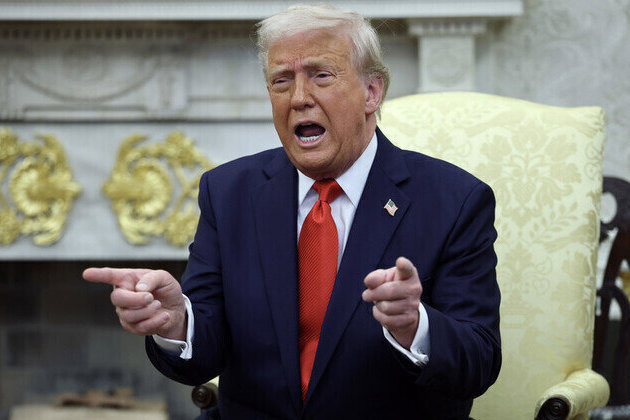
Donald Trump is not, by instinct, a president who seeks war. But he is a president who believes deeply in projecting strength. And in the US, strength is almost always performed on the world stage.
Assessing American policy from the outside is notoriously difficult. The country's political system was built under unusual conditions - a state invented by immigrants, animated from the start by a belief in mission and divine favor. The early American republic saw itself as a righteous outpost opposing corrupt European empires. Later came the great land grab across the continent, then the mass immigration that built a continental power, and finally the leap to full global hegemony. This peculiar historical trajectory shapes a political system unlike any other.
To be fair, every major country is unique. All powers are shaped by their history, culture, and mythology. What stands out about the United States is that a nation so idiosyncratic in its development became the model others were expected to follow. Washington's insistence that its own experience is universally applicable is one of the more puzzling features of the last century. And one of the least examined.
These peculiarities have become harder to ignore during Donald Trump's presidency. And because of America's centrality, the internal contradictions of its system spill easily across its borders.
Trump won by articulating the fatigue of millions of Americans who feel their country has carried global responsibilities for too long. Yet, ironically, one year into his term he is most visible not at home but abroad. He boasts about brokering peace, launches sweeping trade wars, threatens force in multiple regions - especially the Caribbean - and loudly defends Christians and Europeans in Africa. Most recently he has revived loose talk of nuclear testing and a race for new strategic weapons.
This is happening while his domestic position looks far from assured. Polls show that the record-long government shutdown and the stalemate over funding has damaged the Republican Party. Local elections, including those in New York, were encouraging for his opponents. Even Trump's favorite tool (tariffs) now faces legal uncertainty, with the Supreme Court, which is dominated by conservatives, unsure whether to back him.
With a year until the midterms that will determine control of Congress, Washington is already shifting into campaign mode. And here lies the paradox: the candidate who accused his predecessors of obsessing over global affairs at the expense of ordinary Americans is increasingly relying on those same global affairs to sustain his presidency.
There is also a more personal calculation. The Nobel Peace Prize is awarded one month before Americans vote. Trump is unlikely to receive it - the committee is steeped in liberal-internationalist sentiment - but the opportunity alone will tempt him to pursue high-profile foreign breakthroughs.
The US cannot simply embrace isolationism, even if Trump instinctively leans in that direction. Too much of its prosperity rests on its global role: its financial reach, the dollar's supremacy, and its security commitments. A serious retreat would destabilize the system from which it benefits most. Trump probably lacks a coherent plan to reorient American power, but he understands, at some instinctive level, that change is necessary. Hence the chaotic, improvisational style: bold gestures, rapid reversals, and what sounds like a constant drumroll.
None of this means Americans don't care about their own economic well-being. Domestic concerns will always outweigh diplomatic theatrics. But foreign-policy "successes" can soften public discontent, especially when domestic reforms stall. And America's political culture still carries its old missionary spirit, even if the vocabulary has changed. Presidents, whether they admit it or not, are pushed toward global activism by the expectations of their own political class.
For the rest of the world, the conclusion is unavoidable. Washington's pace abroad will remain intense, and may well accelerate. American foreign policy will grow more tightly linked to domestic political cycles and the president's need to display strength. Trump does not want major wars requiring occupation or nation-building. But he relishes shows of power, and those theatrics can create their own momentum. One can always be drawn into escalation while trying to avoid it.
This is the central point: Trump is not a warmonger, but a performer. His slogan, peace through strength, captures it perfectly. The risk is that the performance becomes the policy. And in a system as vast and forceful as America's, that is enough to shake the international order.
This article was first published in the newspaperRossiyskaya Gazetaand was translated and edited by the RT team
(RT.com)
Get a daily dose of Illinois Intelligencer news through our daily email, its complimentary and keeps you fully up to date with world and business news as well.
Publish news of your business, community or sports group, personnel appointments, major event and more by submitting a news release to Illinois Intelligencer.
More InformationBEIJING, Nov. 14 (Xinhua) -- A Chinese foreign ministry spokesperson on Friday slammed the United States for its latest arms sale to...
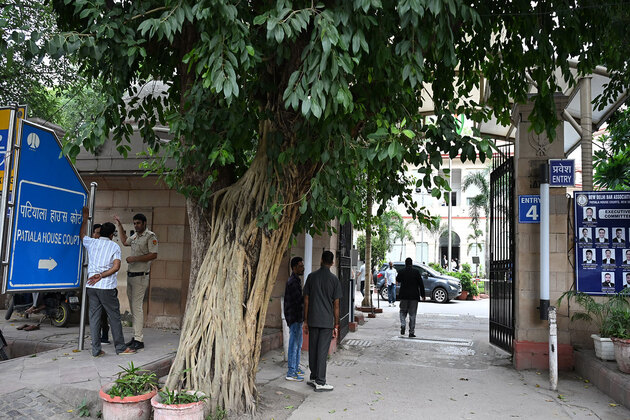
New Delhi [India], November 14 (ANI): Delhi's Patiala House court has granted 14 days' custody of a builder accused in a money laundering...
The US cant retreat because its entire prosperity depends on global power Donald Trump is not, by instinct, a president who seeks...
CHONGQING, Nov. 14 (Xinhua) -- From the misty mountains of Yunyang County, a truck loaded with freshly processed chrysanthemums set...
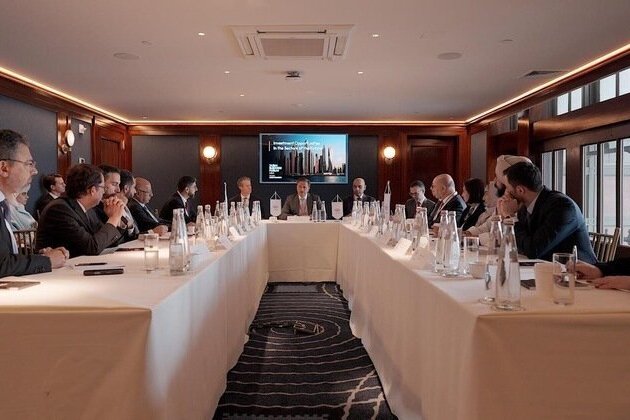
DUBAI, 14th November, 2025 (WAM) -- Dubai Chambers has organised two roundtables in New York to strengthen partnerships and cooperation...
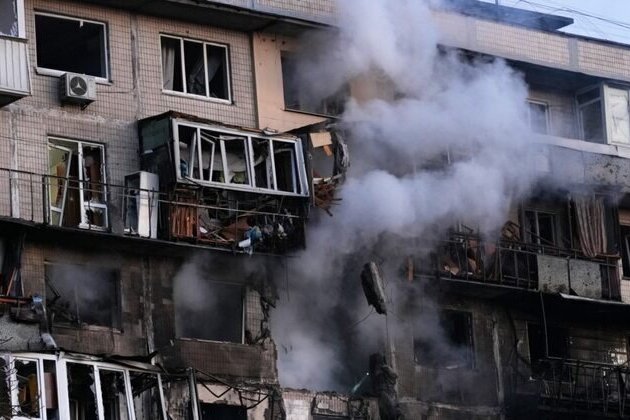
Russian air strikes pounded Kyiv and other cities across Ukraine overnight, killing several people and wounding dozens of others --...
LONDON/NEW YORK CITY: U.S. President Donald Trump has threatened to sue the BBC over its editing of a 2021 speech he gave on the day...
NEW DELHI, India: An explosion in a car near Delhi's historic Red Fort on November 10 killed nine people and injured at least 20 others,...
WASHINGTON, D.C.: President Donald Trump has granted pardons to Rudy Giuliani, Sidney Powell, and several other allies accused of trying...
NEW DELHI, India: A dense grey haze blanketed New Delhi on November 10, choking the city's skyline and sending pollution levels soaring...
DUBAI, U.A.E.: U.S. President Donald Trump has been promoting the idea of Saudi Arabia normalizing relations with Israel, but such...
LONDON, U.K.: The BBC's top two executives — Director-General Tim Davie and News CEO Deborah Turness — resigned on November 9 amid...