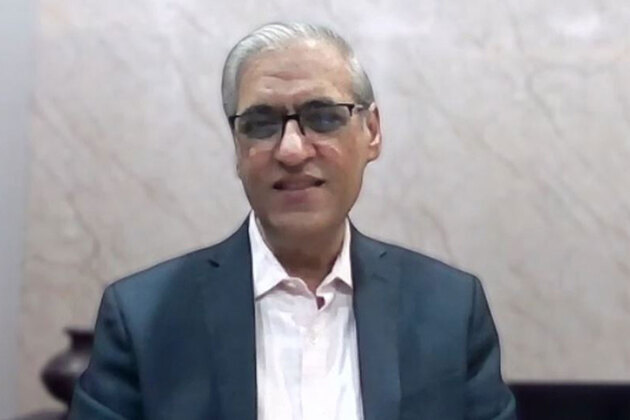
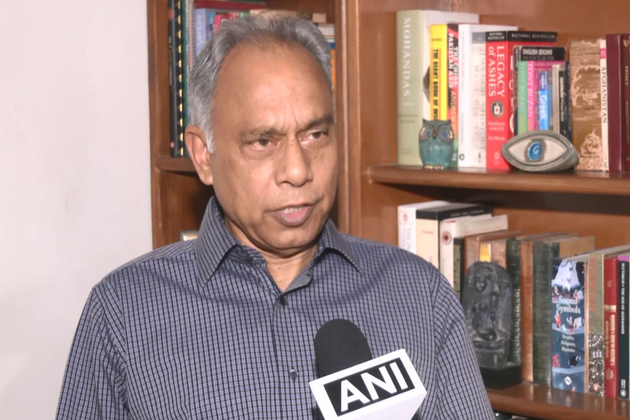
New Delhi [India], March 18 (ANI): Former Indian Permanent Representative to the United Nations in Geneva, Dilip Sinha, has said that the ongoing war involving Iran is likely to turn into a prolonged war of attrition, as it continues to drag on despite intense pressure from the United States and Israel.
While speaking to ANI, Sinha said, 'This war is likely to turn into a war of attrition. It is dragging on. Iran has surprised everybody with its capacity to hold on against such a superpower as the US and a very powerful country like Israel, which means that Iran has been preparing for this kind of an invasion for a very long time.'
He highlighted Iran's extensive preparations, noting, 'They are prepared not only in terms of the drones and missiles that they have acquired and stationed, but also in terms of the way they have hidden these missiles in stores that are not easily accessible.'
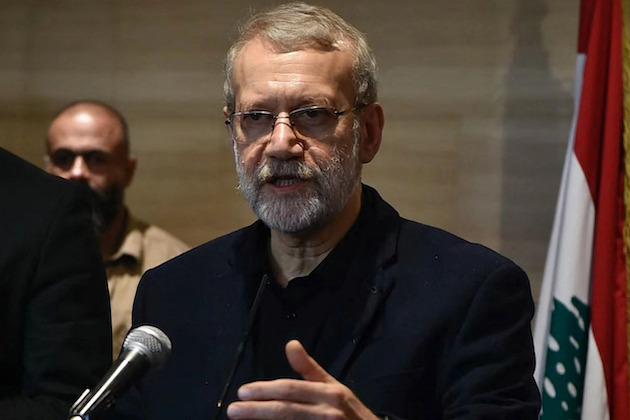
Sinha pointed to the resilience of Iran's leadership structure amid significant losses, including the recent killing of Larijani, who was the secretary of the Supreme National Security Council and a pivotal figure in Tehran's security apparatus. He said, 'You mentioned Larijani getting killed. Several other senior Iranian leaders have also been killed. But despite that, decision-making in Iran seems to be taking place fairly well.'
He added, 'People are still attacking all the countries around the Gulf, which means that Iran had also prepared for decentralised decision-making as part of its preparation for such an invasion. So that even when the top leadership was wiped out, and now Larijani has been killed, Iran's decision-making capacity has not been crippled.'
Sinha said, 'It has obviously decentralised not only its weaponry but also its decision-making process, which has enabled it to drag on this war for so long. And we don't know how long it will be able to do it.'
Shifting to the implications for India, Sinha referenced recent diplomatic engagements and the vulnerability of key energy routes. He said, 'Yesterday, Prime Minister Modi spoke to his UAE counterpart, the President of the UAE. He also spoke about the Strait of Hormuz, which is bearing the brunt of the conflict.'
He explained India's concerns, stating, 'We are heavily dependent on crude oil from the Gulf, and the Strait of Hormuz is a very narrow strait. It is closed right now. Some ships are able to come out, but it is not an easy strait to defend or to clear.'
Sinha stressed the need for greater self-reliance, saying, 'In this situation, all I can say is that I wish we had, in the past, through our policies, made ourselves a little more independent or less dependent on this kind of situation. For example, there is one pipeline, I believe, from the UAE to the port of Fujairah, which is outside the Strait of Hormuz. The Saudis have built a pipeline to the Red Sea so that they are able to carry oil out of the Gulf without using the Strait of Hormuz.'
He further urged diversification, adding, 'This is something that we should focus on to ensure that we are not dependent on the strait for our oil imports. Secondly, we must reduce our dependence on foreign oil because supply chains have been disrupted not only in oil but in other critical minerals as well. It has been established that unless we are self-sufficient in these, we become vulnerable to foreign pressures.'
Turning to developments in Afghanistan and Pakistan, Sinha addressed a recent airstrike by Pakistan that reportedly killed 400 civilians in a hospital strike, which Pakistan has denied. He described the incident as deeply troubling, saying, 'This relationship is fraught with risks of the kind of war that is taking place right now. There have been such incidents in the past also, but this is a particularly bad and very macabre kind of thing to have done--to have attacked a hospital for drug rehabilitation patients.'
He criticised Pakistan's stance, noting, 'What is particularly troublesome is that Pakistan seems to treat it as a very casual affair. At one level, they are taking credit for having struck terror camps inside Afghanistan, and the official media claims that they are very proud of the fact that they have struck them with great precision. But if Pakistan claims the right to strike at terror camps, then it must concede to India also the right to strike at its own terror camps. So it is a very duplicitous game that Pakistan is playing.'
Sinha pointed to underlying issues, saying, 'It is taking advantage of the fact that Afghanistan is a poor and relatively helpless country. There is also the big territorial dispute between Pakistan and Afghanistan over the issue of the province of Khyber Pakhtunkhwa, which Afghanistan claims because it does not accept the border known as the Durand Line.'
He suggested pathways to resolution, stating, 'In this situation, one does not see any easy solutions unless the two countries give up their extraterritorial claims and return to diplomacy. They must also accept a certain degree of decentralisation in their own governance and allow people the right to lead their lives the way they want to.'
He added, 'In the past, for example, there were the Federally Administered Tribal Areas (FATA), which were not under the direct administration of the British, or even later under the Pakistan government. They were allowed complete internal autonomy. These kinds of administrative measures are important to ensure that there is a certain degree of acceptance by the people of the sovereign rights and territorial integrity of Pakistan and Afghanistan, so that they are able to live in peace with each other.'
On India's response, Sinha noted that it was swift and firm, as the country condemned the attack as a 'cowardly attack.'
Regarding the role of international bodies, he said, 'The UN is a political body. It is controlled by political powers. The bigger powers have more control than the smaller powers. So I do not think we should worry too much about what the UN does. Yes, what various countries say and do is important, but the problem today is that the world is busy with the Gulf War and the Ukraine War. So nobody has the time to look at what is happening between Afghanistan and Pakistan.'
He added, 'I have not seen any comments by others, but India has been right to condemn this attack--for Pakistan's double standards, its double standards towards terrorism, its double standards towards Afghanistan's sovereignty, and its complete disregard for human values in its military operations.'
Sinha said, 'They have good knowledge of Afghanistan, so they would have known what this hospital is about. Either they misfired--in which case they should apologise--or if they targeted it as a brutal, genocidal measure, it deserves condemnation.' (ANI)



 Share
Share
 Tweet
Tweet
 Share
Share
 Flip
Flip
 Email
Email