Washington DC [US], April 7 (ANI): A report by Joseph Webster and Ginger Matchett, published by the Atlantic Council, serves as a stark warning against the 'power plant day' strategy currently being weighed by the US administration.
The authors argued that targeting civilian infrastructure is not only strategically ineffective but also humanitarianly and geopolitically disastrous. Webster and Matchett point out that the Iranian military does not rely on the national civilian power grid for its core operations.
'Instead of ending the war, destroying Iran's civilian energy and water infrastructure would likely only serve to prolong and escalate the conflict,' while inflicting 'unprecedented' suffering on non-combatants.
'President Donald Trump has threatened to attack Iranian desalination plants, while repeating earlier warnings that the United States might bomb Iran's energy and electricity infrastructure. If the United States or Israel follow through on these attacks, it will harm Iran's critical infrastructure and civilian population, while doing little to harm the Islamic Republic's military capabilities. There are few good options in the war being waged by the United States and Israel against Iran, and striking Iranian energy and water-related infrastructure is not one of them,' read the report.
Most Iranian military installations, underground missile silos, and command centres have their own dedicated, localised power sources or hardened backup systems.
'While Iran's civilian population would face grave dangers if the electricity grid--and thus water infrastructure--and refineries are destroyed, the ruling regime's military would face few direct setbacks. Outside of some grid-connected manufacturing facilities--which can be targeted independently, without destroying the entire power system--the Iranian military has only limited ties with the national electricity system,' added the report.
Aside from a few grid-connected manufacturing facilities--which could be targeted individually--a total grid collapse would 'do little damage' to the regime's actual combat capabilities.
'Instead, like most militaries, the Iranian military primarily uses middle distillates, especially diesel and jet fuel (but Iran effectively no longer has an air force, and so has curtailed jet fuel consumption). Not only can diesel be stored for months, but the military accounts for a small fraction of Iran's total consumption of this product,' read the report.
'However, it would greatly harm Iranian civilians.'
https://x.com/AtlanticCouncil/status/2041205802174697840?s=20
The report emphasised the 'water-energy nexus' in Iran, a country of 92 million people. Electricity is the primary driver for groundwater pumps and sanitation systems. Destroying the grid would immediately cut off access to potable water, leading to mass thirst and the rapid spread of waterborne diseases.
'The 92 million individuals who live in Iran rely on electricity for life-sustaining services, including cooling, hospital operations, and more. Furthermore, electricity is critical for powering Iran's groundwater wells that provide sanitation services, along with water for food and drinking. Accordingly, striking Iran's water-related infrastructure will immediately spark a crisis of disease, hunger, and thirst among Iran's civilian population. Children and infants will be most at risk. During the 1991 Gulf War, blackouts and resulting water outages in Iraq led to epidemics of typhoid, cholera, gastroenteritis, and malaria, while some estimates hold that 100,000 Iraqi individuals died due to health consequences from the war. Child mortality more than tripled,' the report said.
The authors said that hospitals, food refrigeration, and cooling systems (vital in the region's climate) would fail, causing a surge in civilian deaths.
'Leaving aside the moral and potential legal consequences of airstrikes against Iranian water infrastructure in the absence of a proportionate threat, these attacks would be counterproductive to US war aims. Destroying Iran's water infrastructure would severely damage goodwill toward the United States. Many Iranians--including those who bravely protested against the regime--might regard the United States as a threat instead of an ally to their cause.'
The authors argued that these strikes would actually undermine U.S. long-term goals; many Iranians who have historically protested against the current regime would likely view the U.S. as a primary threat to their survival rather than a liberator, unifying the population against a common 'outside enemy.'
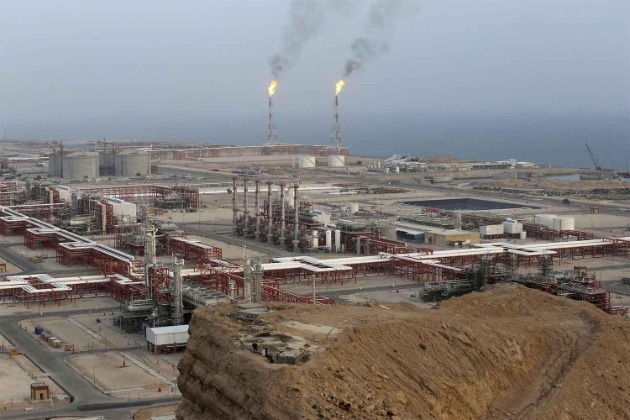
'The United States might also stand to lose support from Gulf allies. The region, not only Iran, is vulnerable to the water-electricity nexus. Desalination plants require large amounts of energy, including natural gas and oil; Saudi Arabia uses around 300,000 barrels of oil per day for desalination. Because the process is energy-intensive, around three-quarters of GCC desalination plants are integrated into national electrical grids--meaning water and electricity are produced simultaneously. Just as striking Iranian natural gas production or even refineries would destabilise the country's water supply, any attacks against regional states' electricity assets could also trigger a water crisis. With just fifty-six plants responsible for more than 90 per cent of the Gulf's desalinated water, Iranian strikes could plausibly cause severe pain across the region,' it added.
Iran has already demonstrated a 'tit-for-tat' retaliation strategy. If its infrastructure is hit, it will likely target the Gulf's desalination plants (which provide over 90% of the water for GCC states) and Israel's own water infrastructure. Israel currently risks losing 80% of its drinking water if its desalination plants are successfully hit in a counter-strike.
Notably, President Trump has warned that failure to comply will result in a simultaneous, massive bombing campaign aimed at 'each and every one' of Iran's electric generating plants and bridges.
He announced, '8:00 PM deadline' (Washington time, Tuesday night) for Iran to reopen the Strait of Hormuz. Trump stated on Monday that the goal would be to leave these facilities 'burning, exploding, and never to be used again' within a four-hour window.
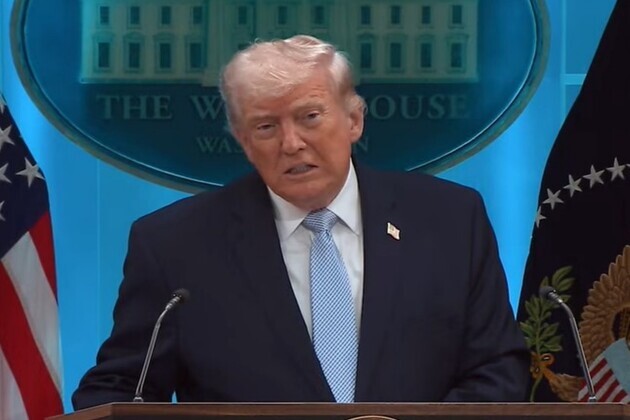
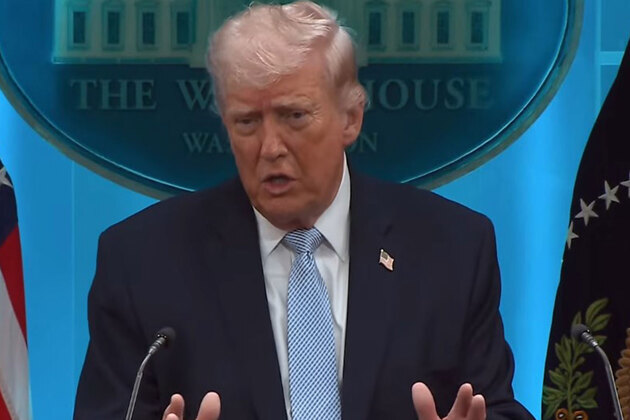
During a White House press briefing, Trump said, 'The entire country could be taken out in one night, and that night might be tomorrow night.'Trump also gave an ultimatum to Iran to make a deal before Tuesday, 8:00 P.M ET, warning that there'll be 'no bridges, no power plants' after that.
Trump said that this is a 'critical period' and Washington has given Tehran the necessary time to make a deal to put this war to an end.'This is a critical period... They asked for an extension of seven days; I gave them 10 days... They have till tomorrow. Now we will see what happens... A lot of people are affected by this. We are giving them until tomorrow, 8 o'clock, Eastern Time. After that, they are going to have no bridges. They are going to have no power plants. Stone ages,' Trump said.
While the Strait of Hormuz closure has already sent prices soaring, the report warns that destroying Iranian natural gas and oil refineries would trigger the 'gravest global energy crisis in living memory,' permanently damaging supply chains and potentially driving the global economy into a deep depression. (ANI)



 Share
Share
 Tweet
Tweet
 Share
Share
 Flip
Flip
 Email
Email