ANI
20 May 2026, 22:31 GMT+10
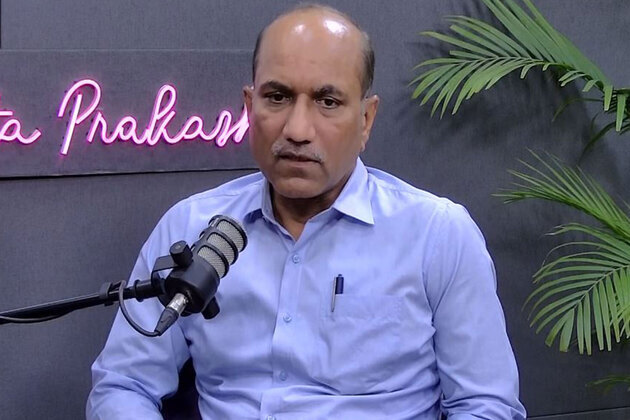
New Delhi [India], May 20 (ANI): Defence Production Secretary Sanjeev Kumar on Wednesday said India needs to focus on dual-use technologies that can serve both civilian and defence needs, allowing quick shift of production in case of war.
In an interview with ANI, Sanjeev Kumar also said that self-reliance means not just manufacturing, but having the 'capability to design and modify weapons the way we want'.
Answering a query about the prolonged conflicts in the world, Kumar emphasised the need to have infrastructure to ramp up production when needed.
'Our exports have increased a lot in the last 10 years...export would take care of a certain part of the requirement. But as a structural change, we will also start to think about where the dual-use technology can be more and more used in the defence sector, so that the factories which are otherwise being used for the civilian side during wartime can be converted into certain incremental efforts, resources for the defence purposes,' he said.
Kumar said such planning must begin at the design stage itself, including the use of components and systems that can be used for both civilian and military purposes.
He noted that building separate defence-only industrial capacity is not practical, and the country must rely on flexible civilian manufacturing systems to meet surge demand during conflict situations.
'A certain action has to be taken right from the design stage. So, what's you can't create a capacity in the defence sector or in the defence industry which will take care of your war requirement, let's say, for n number of days...Because in normal peacetime, what would those industrial complexes do? So, during peacetime, you won't be requiring them, and how would you support them? How would you find out the amount of money which is required, and the amount of manpower required? So, a long-term strategy has to be drawn up, where we have to rely on the civilian sector. Right from the design stage, when we start designing our weapons, we have to find out components, LRUs, and replaceable units, which we say are of dual use,' he said.
'As we need more and more dual-use components, we need to find out their uses in our defence platforms right from when we start designing them. So, a spare capacity, which is on the civilian side, can be used. That type of long-term strategy. For civilian purposes or defence. For defence purposes, when it is required. Otherwise, it is being used for civilian purposes. Export would take care of a certain part, but... Even a country like America and Russia, France and China, which are major exporters, cannot really depend on their export market to ramp up their domestic defence facilities during the time of war, as you yourself have just noticed about America,' Kumar added.
Answering another query, he said private sector in the country is better equipped and more efficiently organised to build a strong drone manufacturing ecosystem.
He said the government's policy focus is to increase private sector participation in defence production, a direction reflected in initiatives from the Department of Defence (DoD), Department of Defence Production (DDP) and Defence Research and Development Organisation (DRDO).
'One is that ministries and the government's objective is to increase private sector participation, and this is clearly visible in our policies, either coming from DOD, DDP or DRDO. And second is that the private sector, by its nature of organisation, is much quicker, swifter. And now drones, per se, require that type of quicker and swifter response. So structurally also, the private sector is better equipped, better organised to handle the requirement of creating a good drone manufacturing system,' he said.
He added that much of India's early drone manufacturing has come from the civilian sector, and these companies are now successfully expanding into defence production as well.
Kumar also said that Defence Public Sector Undertakings (DPSUs) are not heavily involved in most categories of drones, except for a few working on high-end systems.
'The private sector was there, and they are able to replicate their success in the defence sector also. So, DPSUs by and large are not very much involved in drones, barring one or two DPSUs that are working on high-end drones. But generally in other categories of drones, the private sector is very capable,' he said.
Defence Minister Rajnath Singh said in March this year that India must work in a mission mode to emerge as a global hub of indigenous drone manufacturing in the next few years.
Over the past two decades, drone technology has emerged as a transformative tool globally and India is rapidly leveraging its potential across different sectors.
The structured and expanding drone ecosystem is augmenting defence capabilities, national security apart from reshaping public service delivery, infrastructure management and agriculture.
The government has played a pivotal role in accelerating the transition through progressive policy reforms, simplified regulations, and robust digital governance mechanisms. (ANI)
Get a daily dose of Illinois Intelligencer news through our daily email, its complimentary and keeps you fully up to date with world and business news as well.
Publish news of your business, community or sports group, personnel appointments, major event and more by submitting a news release to Illinois Intelligencer.
More InformationNew Delhi [India], May 20 (ANI): Amid concerns over reports that Iran could target undersea communication cables due to tensions in...
New Delhi [India], May 20 (ANI): The United States Ambassador to India, Sergio Gor called on Union Minister Jitendra Singh on Wednesday,...
Washington DC [US], May 20 (ANI): The US House Select Committee on the Chinese Communist Party has released a new investigation alleging...
New Delhi [India], May 20 (ANI): Defence Production Secretary Sanjeev Kumar on Wednesday said India needs to focus on dual-use technologies...
New Jersey [US], May 20 (ANI): Lionel Messi's impact on North American football culture and popular culture in general has touched...
Every morning, Faisal stands along a road on the outskirts of the Iranian capital, Tehran, waiting for a day job. The 27-year-old...
CARACAS, Venezuela: Ten days after the state confirmed to Carmen Navas that her son had died in state custody, the 82-year-old passed...
DUBLIN, Ireland: Fifteen people who avoided paying tolls on the M50 motorway, including car, truck, and van owners, were fined a total...
ROTTERDAM, Netherlands: Authorities at the Dutch port of Rotterdam prepared quarantine arrangements on May 18 for the remaining 23...
LONDON/NEW YORK CITY: The war involving the United States, Israel and Iran has already cost companies around the world at least US$25...
LONDON, U.K.: Prince William plans to sell portions of the Duchy of Cornwall over the next decade to help finance more than £500 million...
PARIS, France: The head of the International Energy Agency warned on May 18 that commercial oil inventories are being depleted quickly...